


Podcast
/ Robot Replacements For Joint Replacement Surgery? w/ Dr. Matthew Russo
Robot Replacements For Joint Replacement Surgery? w/ Dr. Matthew Russo


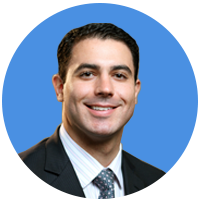
Matthew Russo, MD
Orthopedic Surgery
Matthew Russo, MD
Orthopedic Surgery
- Board Certified by the American Board of Orthopaedic Surgery
- Orthopedic specialist in primary and complex revision total joint replacement surgery
- One of the only surgeons to utilize PULSE – a smartphone app that patients can use to connect with doctors and staff during recovery with exercises and tips.
- Active member of the American Academy of Orthopaedic Surgeons and the American Association of Hip and Knee Surgeons
- Performs the anterior approach to the hip in addition to total and partial knee replacement utilizing cutting-edge robotic surgery technology
- Research in multimodal pain management strategies combined with minimally invasive techniques allows many of his patients to be discharged home safely on the same day as their procedure.
- At the University of Arizona College of Medicine in Tucson, he became a member of a select group of medical students known as the Gold Humanism Honor Society representing “humanistic attitudes in medicine.”
- Completed residency at Georgetown University Hospital in Washington, D.C., where he received multiple awards for resident teaching in medical education.
- Completed a fellowship in Adult Reconstruction at the Anderson Orthopaedic Clinic in Alexandria, Virginia, where he performed over 600 hip and knee replacements.
- Chosen by Georgetown University Medical Students for “demonstrating an exceptional commitment to teaching students”
Education & Training
- Anderson Orthopaedic Clinic
Fellowship, Adult Reconstruction , 2016 – 2017 - Georgetown University Hospital
Residency, Orthopedic Surgery, 2011 – 2016 - University of Arizona College of Medicine – Tucson
Class of 2011 - University of Notre Dame
BS, 2007
Episode Information


Dr. Matthew Russo talks about being a third generation orthopedic surgeon, the dangers of a sedentary lifestyle, and exciting developments in surgery technology and stem cell research.
Topics Include:
- How he followed in his father and grandfather’s footsteps in becoming an orthopedic surgeon
- How he initially went to school for engineering before switching gears to medicine after realizing he didn’t want to be in a cubicle all day
- Why orthopedics is the best specialty in medicine because he can help people who are generally healthy and motivated improve their lives and lifestyles
- How even though orthopedics is generally thought to be helping older people, the joint replacement population is becoming younger because of the success of the procedure and people wearing out their joints at an earlier age
- How runners aren’t at a particularly high risk of wearing out their joints but people who do a lot of jumping are
- Why low resistance and high repetition activities like swimming and cycling are ideal for keeping joints from wearing out
- How stem cell treatments on the market that promise to regenerate new cartilage cells in the joint are false and he wouldn’t recommend his patients to spend thousands of dollars on what’s currently out there
- How he uses a smartphone app as a mobile patient engagement platform to aid in their recovery with communication services and physical therapy exercises after hip replacement
- Why a partial knee replacement is more complex than a total knee replacement, which is why he uses robotic technology to help him use exact measurements
- Why his robotic surgery differs from the DaVinci robot because the robotic arm just lets him execute his surgical plan more precisely, rather than using a joystick on the other side of the room
- Why he only uses robotic technology for knee replacements because the robot for hip replacements isn’t good enough yet
- When joint replacement surgery is recommended over conservative treatments – if it’s taking you away from activities you would otherwise enjoy
- New technologies in imaging with real time feedback
- Multimodal pain management and medications required for recovery from total joint arthroplasty
- How patients will always go online for health information and it’s important that they’re able to find trusted resources like Doctorpedia

The reality is that patients go to Google (and hopefully to Doctorpedia more and more) for their health information. Especially if they don't know much about it. So that's just a reality and is something we have to accept. Hopefully the goal is to be able to provide good resources for patients that are trusted.
Matthew Russo, MD

Keeping the joint active and keeping it mobile with low resistance and high repetition-type activities - swimming, cycling, those sorts of things - is really good nourishment for the joints and will keep those joints going on for longer.
Matthew Russo, MD
Everyday exercise is really more important than you think - just getting up and doing things. Stress is a huge factor and I've dealt with it myself as a physician going through my training and things. One of the best ways to deal with the stressors of everyday life (and that includes with pain and disability) is to stay active and mobile and incorporate an everyday exercise plan.
Matthew Russo, MD


Episode Transcript
Episode Transcript
Daniel Lobell: (00:02)
Alright. On the line with me today for Doctorpedia is Dr. Matthew Russo. How are you?
Dr. Matthew Russo: (00:15)
I’m doing great, Danny. Good to be here. Thanks for having me.
Daniel Lobell: (00:17)
A pleasure. I think you are – and, in fact, I know you are – our very first orthopedic surgeon on the show and I’m excited for myself and for all the listeners to learn about orthopedic surgery, what that is, what you do, why you’re passionate about it, but I think the best place to start is always at the beginning. Now I understand you’re a third generation orthopedic surgeon, is that correct?
Dr. Matthew Russo: (00:40)
That’s correct, yes.
Daniel Lobell: (00:42)
So your father and grandfather, I presume?
Dr. Matthew Russo: (00:45)
Yeah. My grandfather actually has an interesting story. Orthopedics is really only as old as his career, so it was really at the beginning of it. So he didn’t have the opportunity (like I did) to decide orthopedics was his destination and career and instead back then it was you became a primary care doctor. For him it involved some time in the military and through the Navy and being on the ship and those kinds of things. So he spent a lot of time as a general practitioner and then transitioned to actually to some short stint in OB/GYN and did some anesthesia before he decided to do a little extra training and learn about orthopedics back in New York. And he did actually his first – well the first – total hip replacement in his small community in upstate New York. Then my dad with his practice, he (at that point) he actually had to be trained through general surgery as well, prior to orthopedics. And then when I came on with my training, it was more of a direct to orthopedic surgery as it was much more of a flourishing sub-specialty by then.
Daniel Lobell: (01:59)
For them it was kind of like the Odyssey, I guess. You know?
Dr. Matthew Russo: (02:02)
Yeah, it’s been a great road and a lot of good stories around the Thanksgiving table, if you can imagine that.
Daniel Lobell: (02:10)
A lot of orthopedic stories? I don’t think I can’t imagine that. Tell me what that’s like.
Dr. Matthew Russo: (02:14)
Sure. Yeah. Well, we got a lot. I mean, when you get the whole family together, everyone loves to talk about their (or maybe it’s just my family, I don’t know, because they want to just say there woes to me) but everyone’s got a knee complaint or hip complaint and, you know, you hear about it all. But for us, we get the nitty gritty details about all the different ailments and things. So yeah, a lot of Thanksgivings discussing surgery and all of the different things we’ve gotten to do over the years.
Daniel Lobell: (02:47)
So this is really a family legacy for you. Were you as a kid already determined to become a doctor or was that something that later in life you’re like, you know what, maybe I’ll go into the family business?
Dr. Matthew Russo: (02:59)
You know what? Actually, it wasn’t really something that was pushed on me and it’s kind of remarkable looking back on it to think why it wouldn’t be, but no, it wasn’t something like that. I actually didn’t really have any desire to become an orthopedic surgeon when I was growing up – I wanted to do a lot of different things. I actually went into college (which was at Notre Dame) trying to become an engineer – well, I was an engineer – as my degree. And then I made the decision to apply to medical school as my second semester junior year after one of the… you know all the different companies come by and they tell you all the different things of what you can do and then I saw how these engineers were in these cubicles and things like that and it really didn’t sit well with me and I decided I might want to try something different. So anyway, so I grudgingly (actually) decided, you know, maybe I’ll try this medical school thing out and got in and I said, “okay, but I’m not going to do orthopedics. I can’t be that third generation. It’s just too much pressure. I don’t want to do it, you know?” But it just turns out orthopedics is really just the best specialty in medicine.
Daniel Lobell: (04:16)
And why is that? Why do you feel it’s the best?
Dr. Matthew Russo: (04:20)
Yeah. So, you know, it’s a population of people who are generally healthy, for one – which is a plus for a lot of different things – and motivated to get better and to be a better version of themselves and to be a part of that is pretty special. You know, you take these people who are in pain or, you know, in a traumatic situation that’s suddenly taken back from their previous active lifestyle and then suddenly they’re transformed into somebody that they don’t want to be anymore. They’re having discomfort on an everyday basis. They can’t do the activities and now they’re getting unhealthy because, you know, they can’t stay active and do the things they want to do and can’t play with their children or their loved ones or their grandchildren. So being a part of making them better and more functional and more active and healthier is a great honor and really fun.
Daniel Lobell: (05:19)
Is there one case that stands out for you early in your career where you thought, “man, I really made an impact in this person’s life and sort of inspired you or pushed you through?
Dr. Matthew Russo: (05:31)
You know, I would say that I get that almost weekly, I would say. Maybe not daily, but weekly or monthly. I’m reminded of a patient I just saw yesterday who had a fracture of her femoral head as a young child. Actually, it was fixed back then, but she had significant complications following the surgery of heterotopic bone formation, which is this extra bone conform after a particularly traumatic hip surgery. And it was 20 years ago that happened and she just thought that there was nothing she could do. She’s been walking around with almost a fused hip where the hip joint won’t really move at all and came into my office just because somebody said, “Hey, you might want to see this guy, you know, he might be able to help you.” And we just did her hip replacement last week and, I don’t know, she’s two weeks out and I just saw her for her post-op appointment and she was tearful in the office and hugging me and, you know, all sorts of things. And it really is something special that she – she’s a young woman too, she’s still in her forties – but something that she just thought was the way of life, the way she would always be, and walking with a big limp and a bunch of pain and decreased mobility. And now even just two weeks out, she’s so much happier than she was prior to surgery. So, it’s pretty special. It’s surgeries like that that really get you going and keep you moving. And even though that surgery took me two or three times longer than a normal hip replacement does, but a very satisfying surgery with the result like that.
Daniel Lobell: (07:13)
It’s interesting, you know, looking into orthopedic surgery in preparation for this interview, I realized that it’s a musculoskeletal surgery, correct?
Dr. Matthew Russo: (07:23)
The field. Yeah, so the field of orthopedics is – actually, I mean, you know, compared to all my other colleagues and things in medical school – I mean we spend five years of residency after medical school learning how to operate on every part of the body (excluding the brain) although, we do a lot of spine work also. That’s also a part of orthopedic surgery. And we don’t do much surgery in the abdominal region and in the chest, but all the extremities really are included.
Daniel Lobell: (07:54)
Is that a union thing? The abdominal area and the chest, is that like union rules? They’re like, “hey, you can’t go near that buddy.”
Dr. Matthew Russo: (08:02)
That’s right. Exactly. Yeah. That’s the general surgery realm and cardiothoracic, you know, those types of things. We try to stay away from that. If I get too far into the pelvis I start, you know, having to ask for some help, you know, with the vascular surgeons and things like that. We try to stay away from that, but really, I mean, the rest of the body is our domain. And as a result, it takes a lot of patience and a lot of training to really know where the safe intervals are. A lot of anatomy and a lot of our training is focused on normal musculoskeletal anatomy. And then we’re trained on the diseases and pathology and injuries of the musculoskeletal system. So that’s the muscles and bones.
Daniel Lobell: (08:50)
Yeah. Before this interview, I always thought it had to do with shoes. You always hear about orthopedic shoes. I thought it was something to do with the foot or I thought it had to do with old people.
Dr. Matthew Russo: (09:01)
Yeah. Orthopedics (and you maybe read this in your research also) but it was first – the name actually comes from to straighten a child. So pediatrics is obviously children. Orthopedics and ortho means to straighten. And so it was first originated, orthopedics, was the polio, post-polio era and for scoliosis in children.
Daniel Lobell: (09:28)
Taking care of crooked children.
Dr. Matthew Russo: (09:31)
That’s right.
Daniel Lobell: (09:31)
Straighten those kids out!
Dr. Matthew Russo: (09:36)
That’s right.
Daniel Lobell: (09:36)
So that’s interesting. And then it evolved into everybody I suppose. And now I think I most associate it with seniors. I imagine, because that’s a lot of the hip replacements,
Dr. Matthew Russo: (09:51)
You know, yeah. So it’s kind of an interesting development that’s happening. Hip and knee replacements are a very big part of orthopedics now. But it’s really focusing on people who are active and want to remain active. And so our joint replacement population is steadily becoming a younger and younger patient population, partly due to the success of the procedure itself, but also to the desire of these patients who are really starting to wear out their joints at an earlier and earlier age.
Daniel Lobell: (10:26)
Are you talking about people like runners?
Dr. Matthew Russo: (10:29)
Yeah, so actually that’s an interesting question. You know, runners actually – because our bodies, our joints are nourished by the synovial fluid inside the joints – runners actually aren’t at a particularly high risk of wearing out their joints too much. It’s people that do a lot of high impact activities. And so, jumpers, you know, when you do a lot of jumping and that kind of thing. Sometimes there are different kinds of runners or runners who have good form and more of a stride and then the runners who strike the ground really hard. Those patients are a little bit more at risk because our joints really don’t like that high impact lifestyle there. It’s damaging to the cartilage and it’s not good to the joint itself. But keeping the joint active and keeping it mobile with low resistance and high repetition-type activities – swimming, cycling, those sorts of things – is really good nourishment for the joints and will keep those joints going on for longer. And so, it’s the high impact activities we want to stay away from. But that actually, that discussion about runners has been looked at through multiple papers in our literature and it does not look like runners have too much of a higher incidence of joint damage or incidents of joint replacement. So, everyone thinks that it would be the joints, but it’s people who really just you know, chronic injury, high repetition, I mean, high impact activities, those things – those are high risk for ruining your joints.
Daniel Lobell: (12:09)
You know, a family member of mine has a condition where one of their feet is flat. I think it’s called flat foot. Have you heard about that?
Dr. Matthew Russo: (12:18)
Yeah. So flat foot and another word for that is pes planus. And it’s just the way the arch, you know, so some people have more of a cavus foot or a real high arch and then the flat feet are more flat footed. We used to think that caused a lot of problems actually, and people would put in inserts and things to try to correct their gait and sometimes a good orthotic is necessary, but it really is – and physical therapy is a helpful partner with us, and training our patients to walk with a little bit more of a normal gait and a good stride (heel to toe kind of mechanics, which is much more important than any of that.) But, yes, sometimes orthotics are good to be able to create a little bit more of a normal mechanics. But flat feet, you know, it’s not as much of a disabling condition as we watched once thought. In fact, actually sometimes having too high of an arch is becoming more of more of a problem than vice versa.
Daniel Lobell: (13:30)
So arch foot? Is that what it would be called?
Dr. Matthew Russo: (13:33)
Yeah. Pes cavus is the technical word. A high arch.
Daniel Lobell: (13:39)
Or for people like me, it’s flat or arch. What was the name of that fluid that you said? The joints love that fluid.
Dr. Matthew Russo: (13:49)
The synovial fluid. Yes, that is the name of it. Because in our joints there’s a line called the synovium and the synovial lining creates the fluid that’s called synovial fluid. And all of our joints have it, including our hips and our knees. Because the cartilage itself is on the capping. It’s like the cap of our tooth and that cartilage doesn’t have any blood supply. Okay. So it gets its nourishment but they’re living cells and without the blood supply, they need nourishment. And so it’s the synovial fluid that provides the nourishment from the synovium and that gets circulated throughout the joint when you move the joint. And so with lack of motion and the sedentary lifestyle, then the synovium is not able to provide the nutrients to the cartilage and then the cartilage is not as healthy and has more risk for injury.
Daniel Lobell: (14:44)
You know, I hear about a lot of lifestyles, but it always comes back to the sedentary one being the worst. People seem to constantly discourage that lifestyle.
Dr. Matthew Russo: (14:54)
Yeah. I mean, you know, and in joint replacement it’s particularly bad because you know, if you just sit around and you’re not moving, that leads to other issues like pulmonary issues and even diabetes, metabolic syndrome, these things maybe you’ve heard of before, but a sedentary lifestyle really is no good and that’s the first thing I tell patients who come in to me with a wheelchair. Even if they have disabling arthritis in their hip or their knee, you know, you gotta get healthier. You’re in no shape to do surgery. You know, I say that pretty routinely now actually, a patient comes in and they say, “well, I can’t move. It hurts too much. How am I supposed to do anything?” I say, “well, do you think it’s gonna feel any better after I make an incision and cut you open?” It’s going to hurt worse in the beginning. I mean, joint replacement is an investment. You don’t give somebody money in an investment and expect it to give an immediate return. Or, you know, a marathon or something. You know, the goal and the outcome of success and reduced pain and improved mobility doesn’t happen on the day of surgery. You know, it happens after you recover from surgery, obviously. And so I try to get that, I think patients don’t really understand that in the very beginning, they think that once I take away the arthritis, the pain is just gone. And in some ways it is, but it’s replaced by a different type of pain that’s caused by the surgery itself: the incision, the swelling that happens in the first few weeks postoperatively, the muscles which are still trying to recover – even if you use muscle sparing techniques – those kinds of things take some time to recover from.
Daniel Lobell: (16:47)
The synovial fluid, am I saying it correctly?
Dr. Matthew Russo: (16:51)
Synovial fluid. Yeah. S Y N O V I A L.
Daniel Lobell: (16:55)
Is it something that you can inject? Is it something you guys have a way of reproducing?
Dr. Matthew Russo: (17:01)
There’s one form of injection, we call it viscosupplementation. Commonly patients will refer to them as gel injections and these type of injections, there’s three or four different generic forms of this on the market – Synvisc is one of them. Those kinds of things. These injections try to emulate what is providing some buoyancy in our joints to create a little bit of a lubricant layer to try to stave off joint replacement. Particularly effective in knees. Not as effective in the hips and not commonly recommended. So really we’re talking about a knee injection here. But those injections, the main ingredient is hyaluronic acid and don’t try to say that one. If you can’t say synovial fluid, you won’t stay that one very well.
Daniel Lobell: (17:58)
[Laughs] I know.
Dr. Matthew Russo: (18:00)
But what that does is it creates actual ability for the water content in the knee – it grabs onto the water and creates a little bit more of this buoyancy in the joint. And so it acts as an additional lubrication point. That is not really synovial fluid because synovial fluid is your own body’s ability and your own cells, those kinds of things. There’s newer injections on the market of stem cell treatments. This is something that’s a little bit controversial right now and currently not something I’m recommending to patients, to be honest with you.
Daniel Lobell: (18:35)
Why not?
Dr. Matthew Russo: (18:35)
A few reasons for that. As patients, it’s going to be a large out-of-pocket cost because it’s not covered by your insurance. And we’re talking a pretty hefty amount in the form of $10,000 to $15,000 an injection and there’s not really much of a promise that it’s going to benefit you. So that really doesn’t sit well with me. I’ve seen the infomercials on TV about what all the things that stem cells promise and one of the things they promise is that the stem cells actually start to regenerate new cartilage cells in the joint. I can’t think of anything more false than that. It’s just not accurate. I don’t know how they’re able to say it on television, but perhaps because it’s not FDA approved and there’s no governing body, there’s really nobody governing what they can say or what they can’t say. But, you know, maybe in a Petri dish that might be the case, but certainly not in vivo, which means in the body itself. But we don’t have yet the ability to reproduce cartilage cells. Now we do on a very microscopic level, say if you were 20-something years old and you got an acute injury to the knee and it resulted in a very small or focal area of cartilage defect, we do have the ability to go in and scoop out that cartilage defect and put in individual cells in a small, narrow area. And then after that surgery, you have to be off of it – you can’t put any weight on the knee for months.
Daniel Lobell: (20:07)
That puts you into a sedentary lifestyle!
Dr. Matthew Russo: (20:10)
That’s right! That’s right. Yeah. But as a young person, you don’t care so much, you know. But we’re talking about – the disease of arthritis is really more of a diffuse denudation of the cartilage off of the joint. And that happens all over the joint. So it’s not just the small focal area that can be treated, just focally. It needs to be treated all throughout the joint and it’s not worth it to put all these little cells all over and a stem cell treatment does not replace that because it’s not actually putting in the cartilage itself, it’s just injecting this goop in the knee and expecting it to do the same thing and it’s not. So for $10,000 to $15,000, I tell patients to try something else. With the stem cells, that’s not a great option. There is a cortisone injection – very standardized treatment covered by insurance, very cheap, and can be administered every three months until you’re ready for joint replacement.
Daniel Lobell: (21:09)
But it sounds like there’s still a lot of research to be done there. A lot of exciting innovation ahead perhaps.
Dr. Matthew Russo: (21:16)
Yeah, it would be exciting if we had the ability to regrow cartilage in a more macroscopic level but the problem really is that, you know, the arthritis itself (like I said) it denudes all of that cartilage, but then it also creates (instead of the cartilage) this really sclerotic layer of bone, which means really hard, with all of these osteophytes, these bony spurs that start to grow on the size of the joint. Ultimately arthritis becomes more of a mechanical problem, both in the hip and the knee. And in the hip in particular, those osteophytes grow around the femoral head, which is the ball of the ball and socket joint of the hip. That actually starts to decrease the body’s ability to move the joint. And so it becomes much more stiff, much decreased range of motion, which adds to the level of discomfort, it decreases your ability to walk effectively and your gait changes as well as increasing the stress on your low back. And so a lot of patients will start to feel, even if they just have one hip that’s really that bad, that it’s starting to affect the way they walk, increasing back pain and then even going down into the knees as it’s common to have referred pain from the hip that goes down into that ipsilateral knee. So all those things start to become related until you take care of it. Again, it’s a mechanical problem and mechanical problems often need mechanical solutions once it gets to that severe point.
Daniel Lobell: (22:47)
Well, I know that you’re one of the only surgeons who is currently utilizing the smartphone app pulse in conjunction with your treatment, correct?
Dr. Matthew Russo: (22:57)
Correct. Well, yeah, actually it’s funny, you know, all these dynamics of healthcare right now, everybody is buying everybody. So the name itself that you just mentioned is no longer really, it’s being named something else. And so I don’t even know the new name yet, but it won’t be named that anymore. But it doesn’t really matter to be honest with you. I think the technology of a mobile platform, a patient engagement tool is what we’re calling these things. There’s a bunch of them on the market now.
Daniel Lobell: (23:28)
Can you explain how it works to listeners?
Dr. Matthew Russo: (23:32)
They’re very effective. So what it is: a patient comes to see me in the clinic, we talk about options and let’s just fast forward and say that we’ve decided to proceed with either a hip or knee replacement. So once we’ve decided on that, we talk about their individual risk factors, let’s say for blood clot prevention and those things like that and what our pain management strategy is going to be. And we figure out a more of an individualized plan for that patient. All of these things can be generated on this mobile patient engagement platform. And we upload the patient into the program.
Daniel Lobell: (24:14)
So it’s kind of like a portal where they can check in on what you discussed.
Dr. Matthew Russo: (24:18)
Exactly. Yeah. So we have all of their things ready for them up there. Obviously their demographics, their name and things like that, what side we’re doing, the location of the surgery and all those things. And then it gets sent out to obviously myself, but also my PA, my surgery scheduler, and then a couple of my office members, as well as the case manager. All of these things become important as they go through their recovery process in case they need certain things, like they’ll say, “I never got a walker” or something. And if they don’t have it and need access to the walker, they need access to a case manager. You know, I can’t provide the walker for them. Often the questions that they’re asking are best directed to different members of the team. And so, it really clues everybody in on the same program and it becomes an active engagement where the patient can actually text through their smartphone to me and the other providers, and we can kind of make sure everything’s going okay. But really, I think the best tool of this is that for my hip replacements, it takes the place of physical therapy. We get the patients uploaded on this and it becomes a home exercise program. They have videos of somebody doing these exercises I want them to do. And they can emulate those videos, they watch it on their phone and do them from the comfort of their own home rather than having to come to an outpatient physical therapy location.
Daniel Lobell: (25:52)
So in other words, you’re trying to get rid of the physical therapists, huh?
Dr. Matthew Russo: (25:54)
[Laughs] Yeah. Well, you know I have a lot of physical therapy friends and people we send patients to–
Daniel Lobell: (26:00)
–“had” a lot of physical therapy friends.
Dr. Matthew Russo: (26:00)
Well I still do for my knees, but for the hips, you know it’s just something that is not really that necessary anymore. In the first few weeks we focus more on getting patients up and mobilizing them. I think that becomes much more of an important issue, rather than having them worry about specific strengthening exercises. Because in the first couple of weeks we just want those muscles and things and the incision itself to just heal and convalesce before we get them really working. Now our knee replacements, they still need physical therapy. We still need someone to push them a little bit harder than the patient’s really willing to do themselves to get that motion back. It’s very important after knee replacement, that you get the motion back because otherwise you have this stiff joint replacement and a stiff knee ends up being a painful knee replacement. And so we really want to encourage that motion and get that moving. And sometimes that requires an extra set of hands. So I still do send patients to physical therapy after their knee replacement, either partial or total, although the total knee replacements need them much more than the partials. I’ll send them both just in the beginning to make sure we’re on the right track.
Daniel Lobell: (27:18)
Is a partial knee replacement more complicated to do than a total one?
Dr. Matthew Russo: (27:22)
You know what? In some ways it is actually because it’s – so just to get a definition: a partial knee replacement is just replacing part of the knee. Our knee has three compartments: it’s a medial compartment or the inside part of the knee, the lateral compartment or the outside part of the knee, and then the compartment just underneath the kneecap, it’s called the patellofemoral compartment. There’s a partial knee replacement for any one of those three compartments of the knee. If we decide that two of the three are intact – and we can do that either on physical exam, MRI or x-ray or a combination of those three – when we decide that two of the three are intact and only one is affected, then the patient becomes a candidate for a partial knee replacement. A partial knee replacement is a good option for patients who are looking for something that’s a little bit less of a recovery process. And so it’s about half of the recovery process. It’s an outpatient procedure, you go home the same day. To answer your question about how complicated is, it seems like it shouldn’t be too complicated. You might say, “oh, well you’re only replacing half of the knee.”
Daniel Lobell: (28:39)
I would think the opposite. I would think you’d have to fuse together part of the knee with an outside entity.
Dr. Matthew Russo: (28:47)
Right. Well, that’s the thing. You’re right. Exactly. So the reason it becomes a little bit complicated is because in a total knee replacement, I have the option to balance the knee in entirety, and I have full control of the balance and resection levels and how tight inflection and extension and all these options I have, I have the ability to change anything I need to, to make sure that I’ve got a nice solid, stable knee replacement and excellent alignment. With the partial knee, I have to maintain the other two where I’m not messing with it and really match up that part of the knee so that it’s mated to the other knee in a way that is nicely balanced. And so I actually utilize the assistance of robotic technology for this. And I think it’s an important part of why partial knees are doing and better compared with history as far as partial knee replacements. And when I say history, I mean historically, partial knee replacements had not been performing as well as total knee replacements in the outcomes of loosening rates, revision, and then patient satisfaction. And so, you have to take those parameters and say, “huh, why wasn’t it working as well?” And it forced a lot of providers, including my dad, to basically abandon the partial knee replacement in favor of a total knee. The reality is now that if you do it right, these patients are very, very happy and the outcomes are just as good as a total knee replacement with less trauma to the knee and therefore less of a recovery process.
Daniel Lobell: (30:32)
And that’s accomplished by using robotic tools.
Dr. Matthew Russo: (30:36)
Yeah. So what we figured out is that a lot of these patients were developing a progression of their arthritis on the other part of the knee within three to four years of their partial knee replacement. And you say, “well, if I’m just going to have a knee total knee replacement in three to four years, why would I just do the partial? Why not just do the total knee to begin with?” So that’s a pretty valid excuse and you say, “I agree with you there.” But that’s just not the case anymore. So the reason is, because the patients, well it used to be that they would overload the other side of the knee by stuffing an implant in that partial knee replacement too far over that would kick the knee into a different alignment and it would start to overload and wear out the other part of the knee. Most commonly they’ve overstepped the medial side and they start to wear out the outside part of the knee and they start developing outside pain within three to four years. Now with the help of robotic technology – and I did one this morning – we have the ability to accurately align the knee and decide how much it’s going to be before I start to overload the other side of the knee. And so I get real numbers back. So say the preoperative varus or the bowleggedness was about 10 degrees before surgery. And I know that because the robot told me. And then at the end of the surgery, I have to make sure I’m still in slight varus. I don’t want to kick it over into valgus and then cause progression of the arthritis and the other parts of the knee. And then also making sure that the alignment of the components is in a good position so that the components don’t loosen over time. That’s another factor that robotics can help with. And so I think it’s a very valuable tool, especially in partial knee replacement to make sure you have good alignment and then overall alignment, mechanical correction as well.
Daniel Lobell: (32:33)
You gotta be careful when you listen to these robots because they might be giving you misinformation so that they can take over the patient.
Dr. Matthew Russo: (32:40)
You know, so that’s a good point. I’m glad you brought that up because a lot of patients think that here I am off in the corner somewhere and this robot is sitting there working on the knee all by himself. And that’s not accurate. So there is a machine like that in the world of medicine. It’s called with DaVinci machine and that’s used for laparoscopic or the scopes in the belly, abdominal procedures. And they take out gallbladders and things like that with that type of machine.
Daniel Lobell: (33:08)
Would that be used for a gastric bypass?
Dr. Matthew Russo: (33:11)
It can be, yeah. It depends on the type of gastric bypass you have. But yes, that tool can also be used in that type of surgery.
Daniel Lobell: (33:19)
I think I read about that.
Dr. Matthew Russo: (33:19)
Anyway, so with that type of robot, the surgeon is in the corner of the room and it’s acting like this is like a video game
Daniel Lobell: (33:30)
Right. They have joysticks. Yeah.
Dr. Matthew Russo: (33:33)
Yeah. And they look into the thing and all that. It’s because it’s underneath in the laparoscopic field. This is not that. So I’m still right there in front of the patient. This is an arm that comes out and attached to it is a small Burr and the Burr has a trigger on it. But really what it does is it still requires surgeon input. It just basically doesn’t allow me to color outside the lines, in some respect there. So I create basically a three dimensional model on the computer screen prior to the surgery really before I do any cuts of any sort. And then I do the entire surgery on the computer and I map out everything and say that I really like it before we do anything. And then that robot arm helps me execute what the plan is.
Daniel Lobell: (34:28)
Pretty cool.
Dr. Matthew Russo: (34:29)
It is pretty neat. Yeah.
Daniel Lobell: (34:33)
Now, you’ve got to watch out for those physical therapists that you don’t find a robot to take over their knee jobs. [Laughs].
Dr. Matthew Russo: (34:39)
That’s right. People ask me, “is there a role for robotics in hip replacement?” And I would tell you that there is one company that has a robot. It’s called the Maaco robot for hip replacement. I do not use it myself. I only use the robot for knees. The reason is that I just don’t think it’s very good yet. I think that technology in the hips with what I do as far as with an anterior approach, which we can get into as well, which is a different way of doing the hip replacement where I use x-ray, it provides live feedback and, I can get a very accurate assessment of the angle and inclination of the components and then accuracy of leg lengths and stability and all those things from my overlay techniques, which from the x-rays in the surgery, rather than relying on a robot. Right now, the robot for a hip replacement takes up a large field, there’s barely any room for the surgeon there. And it doesn’t give you live feedback, it’s based on the preoperative images and there’s a lot of things that aren’t quite as quite as useful with the hips. But for the knees, I think the technology is very valuable.
Daniel Lobell: (35:57)
Sometimes I feel – my knees feel a little stiff and I just kind of shake them and they click, what is that? What’s going on there?
Dr. Matthew Russo: (36:04)
Yeah. So young people commonly will have a patellofemoral issue. And that’s typically mal tracking – meaning the tracking of the kneecap along that top part of their knee. And that’s very common in patients who sit for a long period of time or they’re on a plane for a long period and they just kinda kinda bring their leg out and those kinds of things. But if you remain active, that doesn’t happen quite as much. Sounds like you’ve got to stand up more often. [Laughs]
Daniel Lobell: (36:35)
Yeah. That’s what I’m getting from this. And we learned about the running being pretty beneficial. Are there other exercises that you recommend to people? Swimming, I think you also said?
Dr. Matthew Russo: (36:48)
Yeah, so swimming, cycling, elliptical – those types of activities are very good for joints. So those are those low impact, high repetition, low resistance – those types of activities. You know, they get your heart rate up as well, obviously cardiovascular-wise. But specifically for joint health, those types of activities will keep you moving for longer.
Daniel Lobell: (37:16)
Will there be a time when we do preemptive hip replacements where people just get ’em almost like, “eh, you know, I feel like this one’s been good for awhile, but maybe I’ll take one for the next 20 years.”
Dr. Matthew Russo: (37:27)
[Laughs] Yeah. So we are pulling the trigger on joint replacements much earlier than we used to. Partly because of the implants themselves. The longevity of the implants and the technology has vastly improved. The youngest person I’ve operated on was 21 years old with a history of hip dysplasia. Those types of patients wear out their joints much faster just because of their native anatomy. And so there’s a lot of patients who have risk factors for bad arthritis that are tending to pull the trigger on their hip before it gets terrible. Let’s say, you know, before things really start to go south. Patients will often ask me, “how do I know when it’s ready, you know? because they’ve heard from other people. Well, you know when you know – and I do agree with that. But I would add to that, that it’s time to consider doing something more than just conservative treatment – which is anti-inflammatories, injections, physical therapy, those types of things – if you’re starting to get away from activities you otherwise normally enjoy because of this hip. Especially if you start to pick up a cane or a walker and those kinds of things and so you watch your activity, your interest in other types of activities start to go downhill and you become less and less active and deconditioned. As a result, you really should consider surgical treatment to get you back into action and improve your activity level and get back to be more functional because then once you get down that road of becoming less and less functional, you’re less and less of a good candidate for the joint replacement in that circumstance. Often patients who come in at a deconditioned level, I will send them to physical therapy or send them to some sort of rehabilitation preoperatively to improve their function and strength and all of those things – even with the degenerative joint – because they need to be at that level to make them a better candidate for surgery itself as well as improve their outcomes after surgery. And then their whole rehab will be much easier and a much more enjoyable process than if they didn’t.
Daniel Lobell: (39:53)
It’s fascinating. You know, we talked a little bit about the stem cell research and the new stem cell procedures that they’re doing which don’t excite you. Is there anything on the horizon that does excite you?
Dr. Matthew Russo: (40:06)
Yeah, I mean, you know, there’s a lot of technology coming out and it is pretty exciting. Even the technology that I do every day with these overlays I just mentioned to you with my hip replacements where we take an extra of one side, we take an extra of the other and overlay them. There are now computer programs that are being built within the C-arm, which is the name of the imaging device, of the X Ray machine that I use in the surgery itself. There’s software now able to go into that and analyze those pictures that I’m taking and give me real time feedback right away to say, “nope, it’s too short, it’s too long” during the trialing process of the hip replacement. Those types of things will make my job easier and also hopefully more accurate. Although it’s hard to improve on that right now as I would tell you that my overlays are very accurate – within about a couple of millimeters – and most patients can’t really decipher that difference anyway. But it’s something that’s, I think, really exciting to look forward to. With regard to the robotic knees, I don’t think everyone needs a robotic knee replacement to be honest with you.
Daniel Lobell: (41:18)
It sounds cool, though.
Dr. Matthew Russo: (41:18)
Yeah. I think we’ve done a pretty good job with the standard instrumentation and things and it’s a costly thing for the hospital, as well as the provider, the insurance company, to be able to have this technology available for everyone. Standard instrumentation works really well. I do think there’s a role in the future for individualized care. And what I mean by that is right now we have the goal that everyone should be at a straight mechanical axis, which means that from their hip center down to the floor, they should be perfectly perpendicular because that’s what the laws of physics say, that that’s the way we want it. But that’s not the way our bodies are made. Everybody’s bodies are made a little bit differently. There’s a little varus in the tibia, there’s a little bit valgus in the femur. We’re trying to apply that into our knee replacements when we do the balancing, but everyone’s a little bit different. And so I think the robot can tell us where we’re at. We just don’t know what number to punch in yet. And so with improvements of the technology will come outcome measures that, say you do a robotic surgery and then it records all that information in the patient. Then if we have wearable technology or patient satisfaction scores to get reliable outcomes after surgery, that then can be relayed back into the preoperative world and we can use that information on the next generation of people coming in and doing the joint replacements, then we can really start to get real data about what we want to plug into those numbers and say, “oh no, if this is this type of patient then I’m going to want… okay, good, he fits in this category…” Instead of just one or two or three categories, it’s going to be 10 or 15 categories of “okay, I’ve got to dial in this amount of varus in the tibia, this amount of valgus here and I want to have a balance that’s slightly off actually because this, this and this, you know, whatever reason.” And then that computer can tell us that we’ve done a good job accomplishing that target instead of the target that is more of a vanilla target. I think that’s really the true realm of capturing this patient population that, you know, because the knee replacements are a tough recovery. Knee replacements can be kind of finicky. The stability can be off sometimes and it’s very individualized as far as which patients will do really well and some won’t. If we can figure that out, I think we’d be on the road to something really big.
Daniel Lobell: (44:07)
Yeah. I mean, what you’re describing is an amazing level of accuracy here. Let me shift gears with you for a second. You wrote an article about different medications required for recovery from a total joint arthroplasty. So can you please explain to our listeners how these differ during the recovery process?
Dr. Matthew Russo: (44:28)
Yeah, so multimodal anesthesia. So multimodal pain management is what we’re really talking about. So I wrote a few papers on this and it’s a big part of recovery after joint replacement and it’s made a big difference in getting patients home safely the same day because we can control their pain and allow them to become more mobile. How do we do that? Okay. Well, we figured it out (and it wasn’t me) the total joint community figured out that it begins preoperatively. So if you start to trick the body into not feeling pain to begin with, it doesn’t send off all of these inflammatory mediators which cause pain later. And so what we do is that even in the preoperative bay, this is really where it starts. And actually we figured out it could even start in the few days prior to surgery in the form of an anti inflammatory like Celebrex. We try to decrease the body’s inflammatory response prior leading up to the surgery. We have some different “cocktails”, I would call them. Different things that we do. The article you mentioned, I include my specific pathway, those kinds of things. And what does that include? It includes Tylenol, you know, easy stuff really, but it’s just hitting the pain pathway and that your body’s feeling from multiple avenues.
Daniel Lobell: (45:56)
So Tylenol is an anti-inflammatory?
Dr. Matthew Russo: (45:58)
No, Tylenol is not an anti-inflammatory, it’s just an analgesic actually. But the Celebrex is what you have preoperatively as well. That’s the anti-inflammatory or Meloxicam that works actually equally as well. We use Toradol, in addition – that’s an anti-inflammatory as well. But my point is that trying to attack the pain that the patient is about to feel or is feeling after surgery from multiple different angles, from the surgical site itself, to the pain mediators sending out increased pain signals, to the nerves leading up to the brain and in all of those locations trying to beat down what the pain is actually to the patient and ultimately, having an improved result. So, in the preoperative bay, we use a combination of Tylenol and anti-inflammatories as well as Lyrica or Gabapentin, which are different types of pain medications, not opioids. The key here that we’ve figured out is that opioids are a bad player in all of this. Opioids tend to actually hyper sensitize the pain pathway rather than actually controlling pain, which is sort of an oxymoron and what everyone’s always thought of. But in the preoperative area, especially. Now, we still use light narcotics after surgery to help control pain afterward and I think it is necessary in the postoperative period, but in that first initial and preoperative and then that initial perioperative period in the PACU, which is the place they go right after surgery, narcotics really don’t have any role for my patient.
Daniel Lobell: (47:55)
It sounds like you’re saying they’re just completely counterproductive.
Dr. Matthew Russo: (47:58)
Yes. In that acute inflammatory response after surgery and right before surgery, it’s actually, it is counterproductive. Exactly. Right.
Daniel Lobell: (48:08)
Huh. Well, we’re running out of time here, but first of all, thank you so much for doing this.
Dr. Matthew Russo: (48:14)
Yeah, my pleasure. This has been fun.
Daniel Lobell: (48:15)
I’ve certainly learned a lot, but as you know, this is for Doctorpedia. Here at Doctorpedia, we’re very dedicated to assisting the online health space in whatever way we can. So my question to you, first of all, is what is your view on that online health space? And do you encourage or discourage patients to go and look online for information?
Dr. Matthew Russo: (48:40)
You know, this is a great question and it’s not really up to me is really the answer. Patients look to the health space regardless of what their doctors tell them to for their information. I’ve had it happen to me in the middle of the visit with the patient and their patient’s family. I say something like, you know, “this is common for hip dysplasia.” And the family member would say, “how do you spell that?” As they’re typing it into their iPhone, you know, to Google it. And I was like, “oh my gosh, listen to me. I’m telling you what it is.” The reality is that patients go to Google (and hopefully to Doctorpedia more and more) for their health information. Especially if they don’t know much about it. So that’s just a reality and is something we have to accept. Hopefully the goal is to be able to provide good resources for patients that are trusted. The more resources we have through an online community such as Doctorpedia, the more trusted the responses will be, and hopefully they’ll get better information because of it. I am a strong believer in it. I have multiple things on my website and I commonly will direct patients. I say, “Don’t read that. Go to my website. Go to Doctorpedia as well and find out some more information from a trusted resource.” Just Googling it straight from an untrusted resource is not a good way to spend your time and you’re going to be misled that way. My sense is that we need to control the narrative a little bit more. We can’t, as doctors, allow our patients to be fed misinformation and ultimately potentially be harmed by it. It’s our job to try to direct these patients to a more honest source of information so that they can heal and get better.
Daniel Lobell: (50:49)
I like to end off these interviews by asking if you have any general health or wellness advice that you’d like to share with the listeners? So I’ll do that. [Laughs]
Dr. Matthew Russo: (50:59)
Everyday exercise is really more important than you think – just getting up and doing things. Stress is a huge factor and I’ve dealt with it myself as a physician going through my training and things. One of the best ways to deal with the stressors of everyday life (and that includes with pain and disability) is to stay active and mobile and incorporate an everyday exercise plan. And that’ll keep you much healthier and happier than most other things that you can think of. So, general wellness I would say is “everything in moderation” and then an exercise plan and that’ll keep you healthy.
Daniel Lobell: (51:52)
Dr. Russo, it is a pleasure. Thank you so much.
Dr. Matthew Russo: (51:55)
Alright. Pleasure is all mine. Thanks a lot, Danny.
Daniel Lobell: (51:57)
Alright. I’ll look forward to seeing more from you on Doctorpedia.com
Dr. Matthew Russo: (52:01)
Alright, sounds good. Talk to you soon. Thanks a lot for having me.

.avif)


